
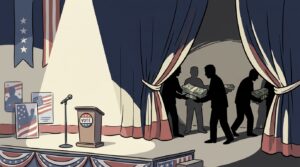
 What is dark money and how does it affect our elections? The truth is that it’s shaping the 2026 midterm elections in ways most voters never see. AdImpact projects $11.6 billion in political ad spending this cycle which means political advertising is on track to break records. But behind many of those ads is money voters can’t trace. The New York Times recently reported at least $1 billion of untraceable money is flowing through the midterm elections.
For political ad buyers, knowing where that money comes from is part of knowing the battlefield. For voters, it can reinforce distrust in the political system when it feels like candidates and election results are bought by corporations and wealthy donors.
Here’s what dark money is, how we got here, and how it influences this year’s elections and beyond.
What Is Dark Money in Elections?
Dark money is political spending by groups that don’t have to disclose their donors. It usually flows through nonprofits, such as 501(c)(4) “social welfare” organizations, which can spend on politics without revealing who funds them. They can receive unlimited funds from sources such as corporations and unions. These nonprofits can also give to super PACs (political action committees). Super PACs do report their donors, but the report only names the nonprofit, not the people behind it.
The result is a chain of organizations that hides where the money started but can greatly influence how people vote. Furthermore, voters see the ad but they rarely see who paid for it.
Does dark money also mean there are foreign contributions? Foreign contributions in American elections are illegal but things like paid content creation have shown cases where foreign spending was behind it. This can be hard to quantify because the money is hard to trace, according to Dan Weiner of the Brennan Center for Justice.
Additionally, dark money isn’t the same as a megadonor’s reported donations. When megadonors or wealthy individuals donate millions of dollars to candidates and organizations, they’re generally reported to the FEC. Dark money is the spending no one can trace. Both have grown since 2010, and together they shape federal elections like House races, Senate races, presidential elections, and even local elections.
Groups on both sides of the aisle use dark money, but this cycle, the biggest checks are flowing to Republicans.
Elon Musk Becomes the Biggest Known Donor of the 2026 Midterm Elections
 The richest person in the world is now the biggest known donor of the midterms. Elon Musk has given $276 million to the Republican Party and his super PAC since July, outspending the Democratic Party. But it’s okay because, according to The Guardian, it only affects 0.04% of his $1 trillion wallet.
Musk’s donations aren’t only funding political ads. They’re paying for voter turnout and canvassing efforts in states like Texas, and they’re backing candidates directly. When Republican Ken Paxton struggled to raise money for his Texas Senate campaign, Musk gave $10 million to a super PAC supporting him.
One donor with multi-million dollars of “pocket change” can now rescue a struggling Senate campaign. That’s not a loophole. It’s the system working the way the Supreme Court allowed.
Where Dark Money Hides: Super PACs, Nonprofits, and Confusion
Democrats have raised more money than Republicans for House and Senate races in the third quarter this year, according to The New York Times. But Republicans are staying competitive through outside groups. Super PACs supporting Paxton alone have taken in $158 million.
Tracing that money is hard by design. Dark money groups rely on nonprofits because nonprofits don’t have to disclose the identity of their donors. And super PACs often aren’t registered in the states where they say they’re based. This system creates confusion, and confusion protects the people writing the checks. Meanwhile, voters lose confidence in the democratic process.
What Was Citizens United and How Does It Affect Elections Today?
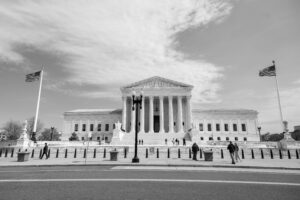
 In 2010, the Supreme Court ruled in Citizens United v. Federal Election Commission that the government could not limit independent political spending by corporations and outside groups like unions because it’s unconstitutional. The decision allowed corporations and other outside groups to spend unlimited money in elections. At the time, the Supreme Court thought that transparency would help voters determine the source of funds but that has proven to be incorrect.
In the years since, the Supreme Court has made decisions loosening regulations around political campaign funds and thus enabled the rise of super PACs. Unlike traditional PACs, which give directly to candidates under contribution limits, super PACs can raise and spend unlimited amounts, as long as they don’t coordinate directly with a campaign. In June, another recent SCOTUS ruling struck down political spending limits, likely leading to more big donations through political parties.
Sixteen years later, the effects are everywhere. Elections that once depended on candidates raising money from voters can now lean on a small number of wealthy donors and groups that can spend without limits and transparency.
How Does Dark Money Influence Elections?
Dark money in elections doesn’t just add dollars. It changes how races are run:
- More ads, more noise. A record $11.6 billion in political ads means voters see more messages than ever, especially online where there are no current regulations on online political ads.
- Less accountability. When donors stay hidden, voters can’t weigh the motives behind a message.
- Outside groups set the agenda. Anti-trans messages and other rhetoric is funded by wealthy donors who have ultra-conservative and harmful views that seem to dominate the conversation.
- An uneven playing field. Candidates can out-raise their opponents with voter donations and still face waves of outside money in the final weeks.
What Dark Money Means for Political Ad Buyers in the 2026 Midterms
For ad buyers, dark money changes the math. Outside spending floods broadcast, digital, and radio inventory in the final weeks, raising competition for airtime and attention. Recently, the Supreme Court issued a ruling that political committees, like candidates, can now qualify for the lowest unit rate on broadcast ads. This came 60 days before the midterm election. So, the market will get more crowded and because the Republicans are currently better funded than the Democrats, under this ruling they get an advantage.
 When you can’t match the other side dollar for dollar, every ad has to work harder. That means sharp scripts, smart placement, and a voice voters trust. Whether it’s an attack ad, a message on affordability, or Spanish-language outreach, a voice that sounds like the community it’s speaking to can cut through an avalanche of anonymous ads.
Money can buy airtime. It can’t buy trust.
Frequently Asked Questions
What is dark money in elections?
Dark money is political spending by groups, usually nonprofits, that don’t have to disclose their donors. It can also pass through super PACs, which report the nonprofit as the donor but not the people who funded it.
How does dark money influence elections?
Dark money increases the volume of political ads, hides who is behind a message, and lets outside groups prop up candidates who can’t raise money on their own. It can influence House races, Senate races, and local elections without voters knowing who paid.
What is the difference between a PAC and a super PAC?
A PAC can give money directly to candidates but faces contribution limits. A super PAC can raise and spend unlimited amounts but can’t give directly to candidates or coordinate with their campaigns.
What did Citizens United do?
The Supreme Court’s 2010 Citizens United v. FEC ruling allowed corporations and outside groups to spend unlimited money on independent political activity, opening the door to super PACs and today’s wave of outside spending.
How much will be spent on political ads in 2026?
AdImpact projects $11.6 billion in political ad spending for the 2026 election cycle, a record that surpasses the 2024 presidential election.
Is Elon Musk's political spending dark money?
No. Musk’s donations are disclosed, which makes him a megadonor rather than a dark money source. Dark money refers to spending where the original donors stay hidden.