
At Blue Wave Voiceover we’re focused on elevating authentic voices from the Middle Eastern and North African (MENA) community. If you’re thinking about hiring a MENA voice actor but need more information for clarity and to get your message to the right audience, you’re in the right place.
Who is MENA?
The federal government has historically categorized people who have origins in the Middle East and North Africa as “white” although they don’t identify with the white experience. This can lead to underrepresentation. According to this PBS News Hour article, the White House’s Office of Management and Budget (OMB) defines “white” as anyone with origins in Europe, the Middle East, or North Africa. For decades, representatives from this community have called for Middle East and North Africa (MENA) to be recognized as a new category in the United States Census to inform funding, gain access to research, allocate resources, and develop policies to serve the MENA community.
Middle East Diversity

Spanning Asia, Europe, and Africa, the Middle East comprises countries that represent a diversity of languages, religions, and cultural traditions. Over the past years, the Middle East has witnessed an expansion of their political presence in the United States, embracing its heritage while actively engaging in global affairs. As the world becomes even more interconnected, its impact on pop culture, politics, and language continues to grow and leave a lasting impact on American culture.
The Middle East region is comprised of countries and a British Overseas Territory that vary in size, population, and cultural heritage including Akrotiri and Dhekelia, Bahrain, Cyprus, Egypt, Iran, Iraq, Israel, Jordan, Kuwait, Lebanon, Oman, Palestine, Qatar, Saudi Arabia, Syria, Turkey, United Arab Emirates, and Yemen. As the birthplace of Islam, Christianity, and Judaism, these faith traditions have strongly influenced Middle Eastern history and culture.
Arabic is the primary language in the Middle East and includes various dialects spoken in different countries. Additional languages include Hebrew, Turkish, and Kurdish.
North Africa consists of Libya, Tunisia, Mauritania, Algeria, and Morocco. Arabic is the dominant language though French, English, and Amazigh are also common depending on the country.
MENA immigration to America
According to a 2018 report, the Arab American Institution Foundation estimated the Arab American speaking population at more than 3.6 million people in the US. The first wave of migration began in the 1880’s when immigrants brought and shared their culture, traditions, food, and perspectives. The second wave of migration came following political turmoil including the effects of the 1948 Arab-Israeli war. Then the passing of the Immigration and Nationality Act in 1965 brought a third wave of MENA immigrants to the US.
Like many immigrant communities, motivations for moving to the United States include seeking economic opportunity to pursue a better life for themselves and for their families. In addition, political turmoil and civil unrest in their countries have prompted many to seek refuge here with the promise of freedom and hope. A report from the Migration Policy Institute noted that close to 30 percent of immigrants from the MENA region live in California or Michigan.
MENA Voting Power in America
According to a report from the Arab American Institute, 40% of Arab Americans surveyed identify as Democrat compared to the 24% who identify as Republicans. In states with large Arab-American populations like Michigan, California, and New York, the community has become a large voting bloc with significant voting power to influence outcomes in local, state, and national elections.
Candidates have spoken on issues that resonate with the Arab-American community including immigration reform and foreign policy related to the Middle East, and according to PBS, cities such as Dearborn and Hamtramck in Michigan have begun providing ballots in Arabic. Recent elections in these cities have resulted in electing their first Arab American mayors. In 2022, five Arab Americans were elected to the US Senate, representing South Dakota, Maine, Michigan and New Hampshire.
MENA In Pop Culture and Entertainment
In addition to gaining prominence for international events, the Middle East’s influence on pop culture continues to grow. Arab-American actors, filmmakers, and musicians have made incredible contributions with television shows like Mr Robot, which aired from 2015-2019 and starred Rami Malek and created by Sam Esmail, who both come from immigrant Egyptian families. Monk, another popular TV show, featured Tony Shalhoub. Furthermore, musicians like DJ Khaled, whose parents are Palestinian immigrants, and Paul Anka, whose parents were of Lebanese descent, have made significant contributions to the music industry. Comedians including Mo Amer, and Ramy Youssef have also paved the way for diverse representation in.
Hire Middle Eastern and North African Voiceover Actors
We’re proud to feature voiceover actors representing the Middle Eastern and North African (MENA) community. Bringing in an authentic voice to your project ensures that you bring a cultural sensitivity and understanding so that your message resonates authentically. and avoids unintentional misrepresentations or cultural insensitivity.
If you’re looking to hire a MENA voice actor to reach this audience for your next campaign, please contact us at casting@bluewavevoiceover.com. We’re happy to provide you with all the information and voiceover samples that you need!
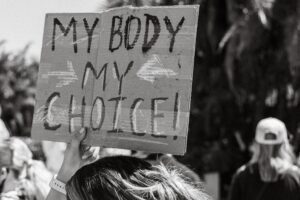 The discussion around reproductive rights isn’t new. It’s a topic that continues to take center stage–especially in the context of politics and religion–and can include often heated conversations around birth control, abortion, and access to quality reproductive healthcare. With the Supreme Court overturning Roe v. Wade, decisions surrounding women’s rights have been left to each state. The recent changes in laws will likely lead to increased pressure on leaders in progressive states to protect and expand reproductive rights. The fight will need to incorporate grassroots campaigns, advocacy work, and strategic advertising. Local campaigns will need voices in their ads that reflect the very audience they are fighting to serve.
 Working with a

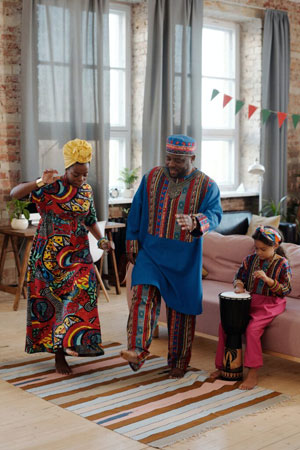
 Immigrant Heritage Month is an opportunity to celebrate and acknowledge the vibrant cultural heritage and contributions of immigrants to the United States. It’s also a time to acknowledge the increasing political engagement of the immigrant community and the impact that voiceovers have in amplifying their voices and keeping them informed during the campaign and election season.
 A professional voiceover talent knows the exact combination of tone, cadence, pitch, and articulation to not only capture the listener’s attention but also keep them engaged throughout the podcast episode. Whether it’s a corporate podcast looking to share serious business information or a branded podcast targeting a specific audience through storytelling, working with a voice actor ensures that the podcast hits the mark. It can sound natural and conversational so that it creates an enjoyable listening experience and grabs the listeners you’re looking to reach.
 The roster of talent at Blue Wave Voiceover all have access to broadcast-quality professional home recording equipment including microphones and audio editing software. Our professional voiceover actors are highly knowledgeable and trained in microphone techniques, acoustics, audio editing, and bring not only the voice acting skills but also the technical skills to create high-quality audio.
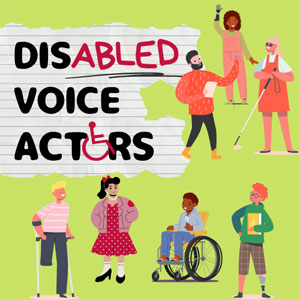 This database is important for a number of reasons. Studies have shown that people living with a disability still
  How To Join The Database As A Disabled Voice Actor